What nobody tells you before your first mountaineering camp
Inside the Alpine Club of Canada’s General Mountaineering Camp, and why I keep going back.
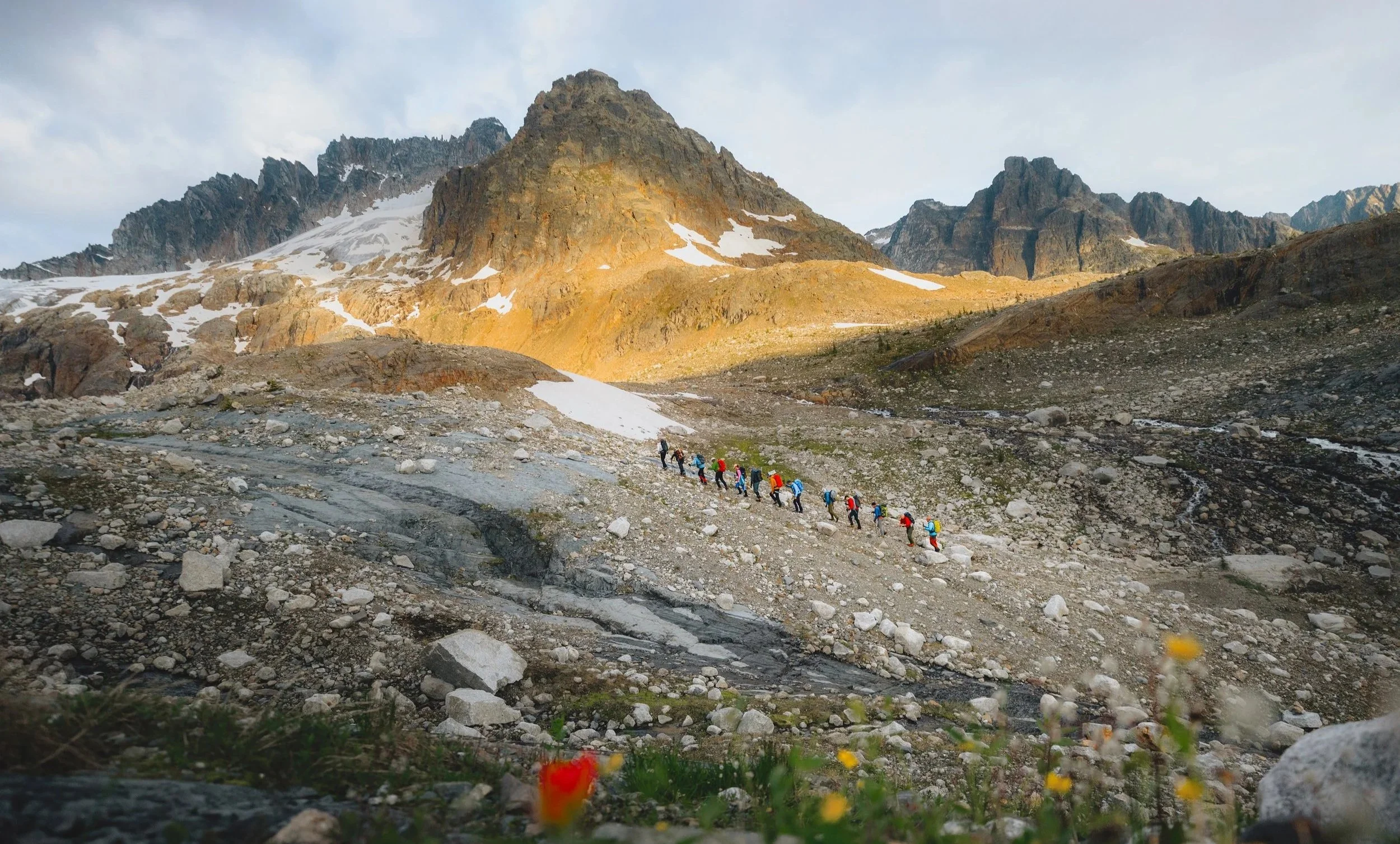
So you're curious about mountaineering camp, but quietly nervous you're not skilled or experienced enough?
Well, this one's for you.
Maybe you're an avid hiker with a few scrambles under your belt, or a keen climber who hasn't yet made it onto glaciated terrain. You keep seeing photos from the Alpine Club of Canada's General Mountaineering Camp pop up in your feed. It looks pretty unreal (spoiler alert: it really is) but then that little voice kicks in:
“Is this in my wheelhouse? Will I be able to keep up? What if everyone else is way more experienced?”
You're not alone. I felt the exact same way before my first GMC.
While I had a solid base of scrambling and climbing, I had barely touched glaciers and worn real crampons maybe once or twice. What I did have was a very loud case of imposter syndrome, but I showed up anyway. By the end of that week I was genuinely almost crying on the drive home… and I've gone back every summer since.
So here's everything I wish someone had told me before I signed up.
“What’s a GMC?”
The General Mountaineering Camp is an Alpine Club of Canada tradition that's been running for over 100 years, which is pretty wild when you actually pause and think about it.
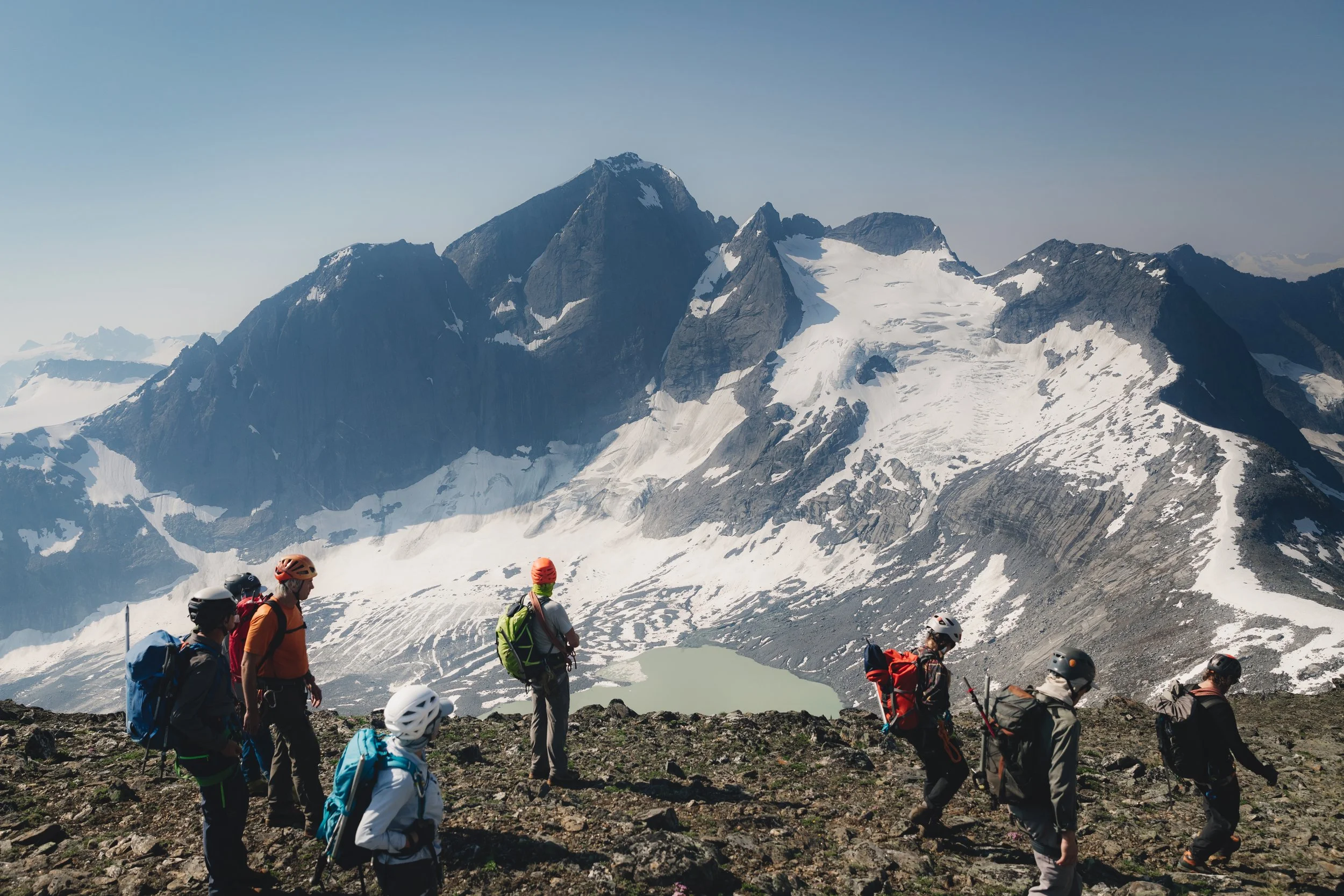
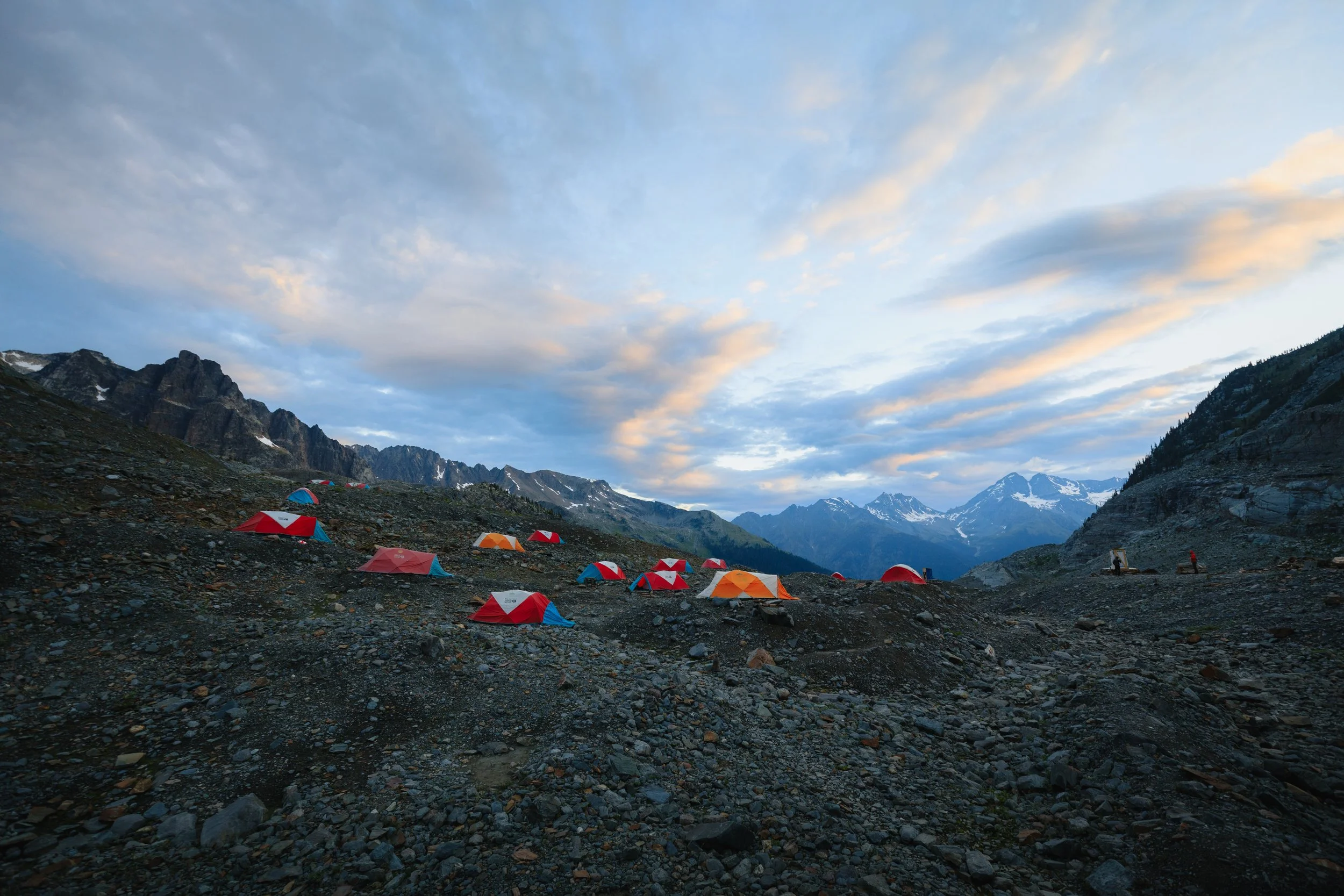
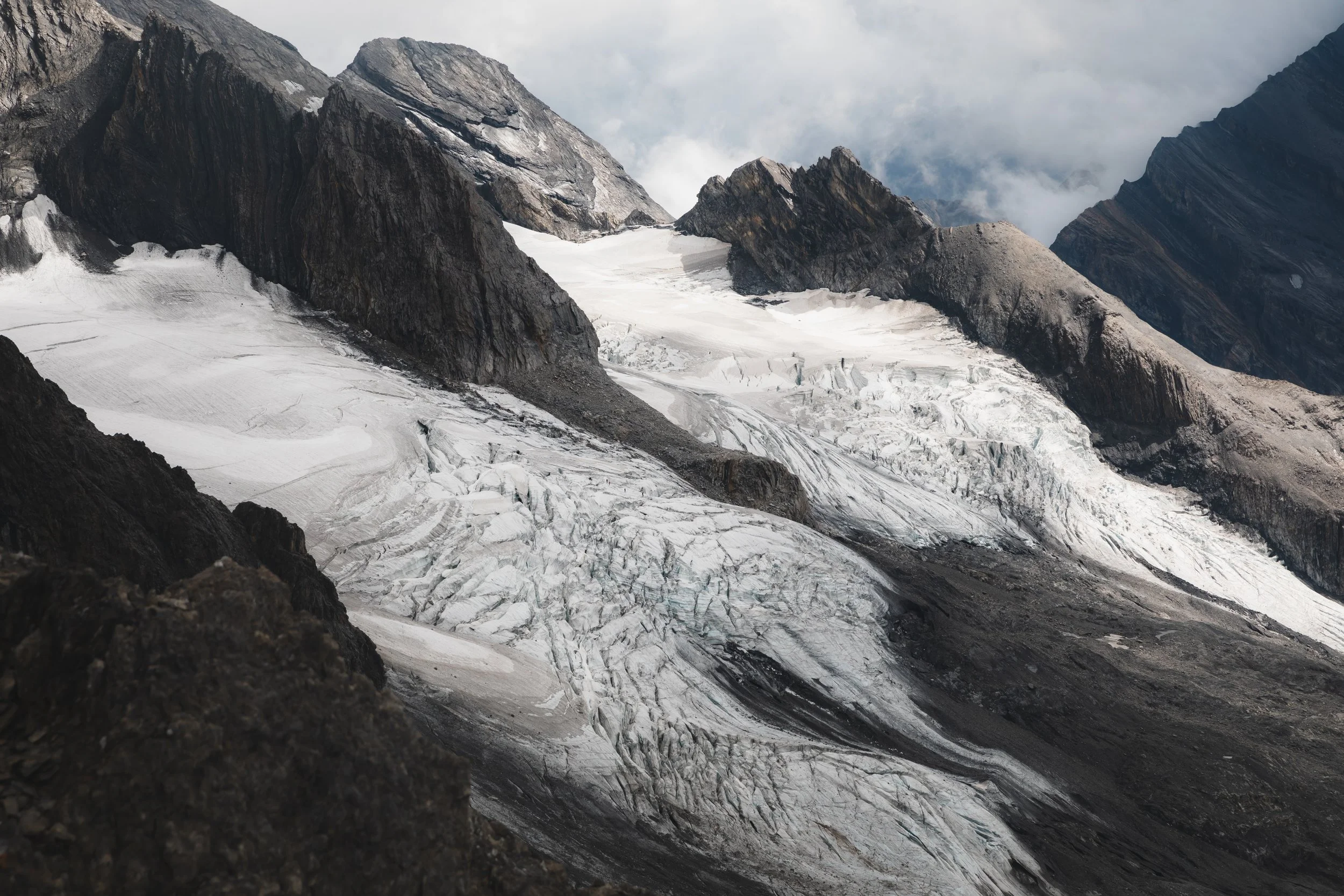
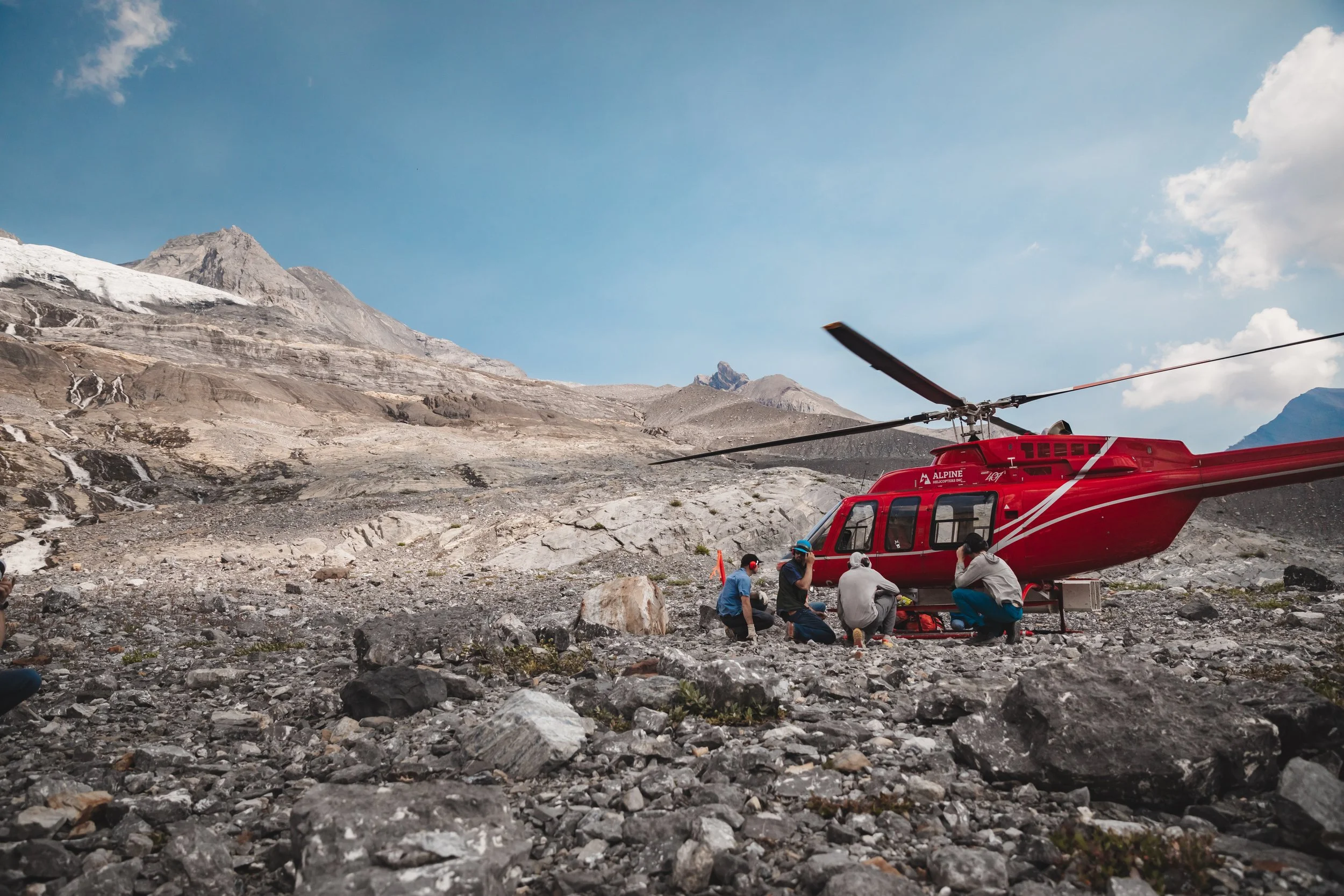
Every summer the ACC sets up a full basecamp in a remote corner of the Canadian Rockies or surrounding ranges. Helicopter access only, no roads or civilization… just glaciers and summits that remain largely untouched. It’s not uncommon to find summit registries with their original ascents and history.
When you arrive, camp is already built: rows of sleeping tents, kitchen and dining tent, gear racks, and even showers, which anyone who has spent time in the backcountry knows is an absolute luxury. A full team of staff is there to support the week, plus an all-star kitchen crew making genuinely incredible food. On the guided weeks you're also led by a team of ACMG guides who plan daily objectives, run skill sessions, and keep a close eye on conditions.
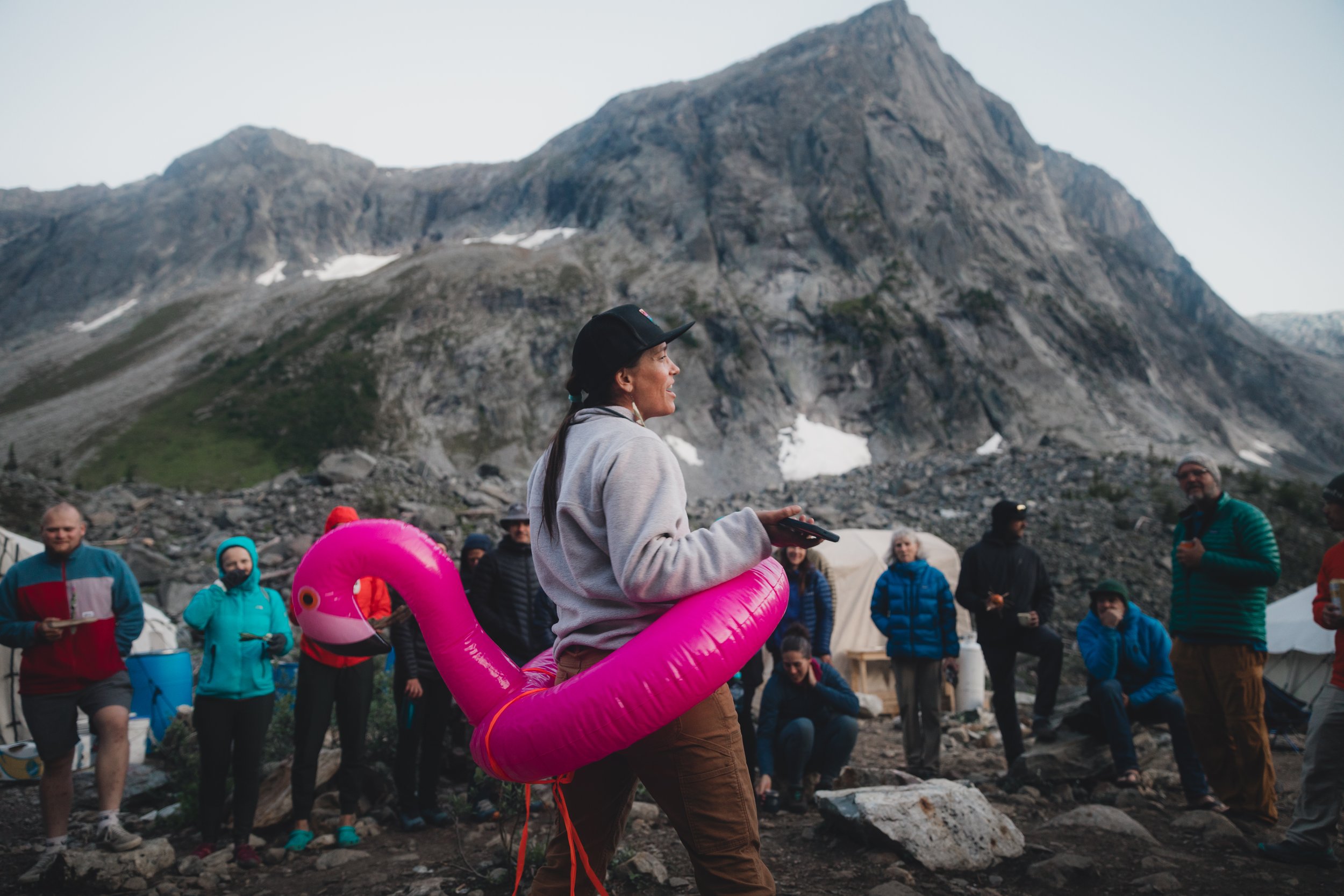
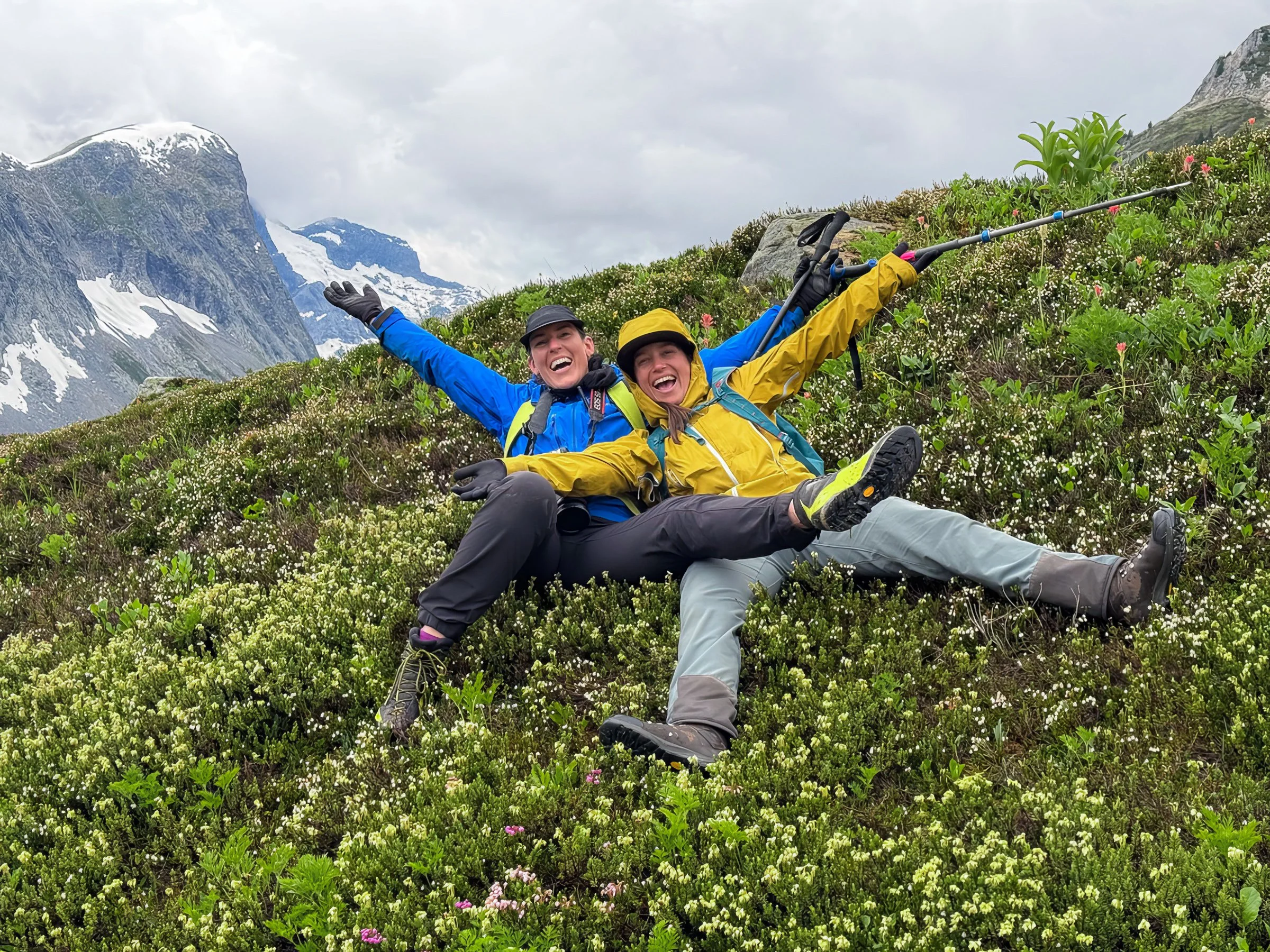
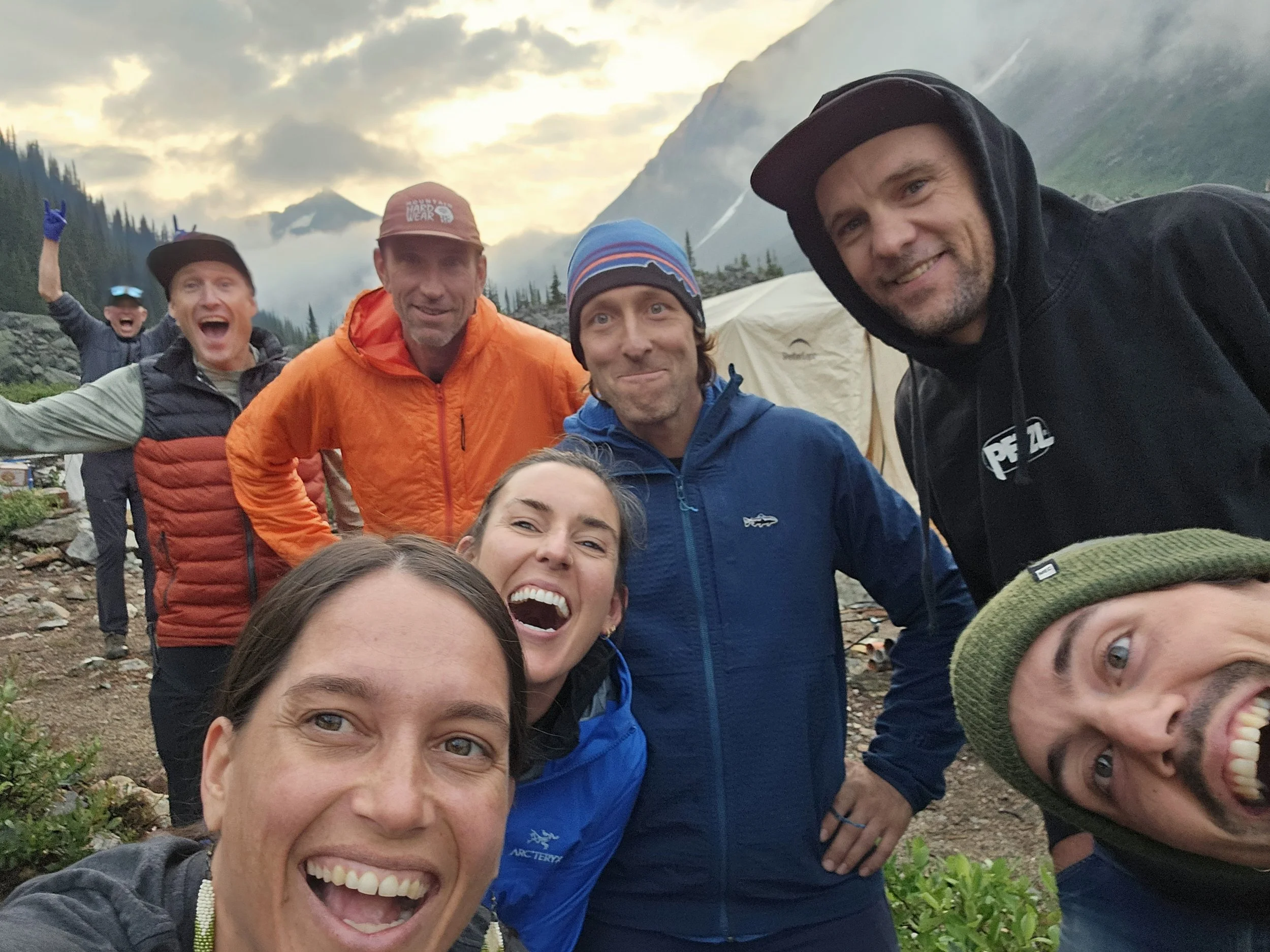
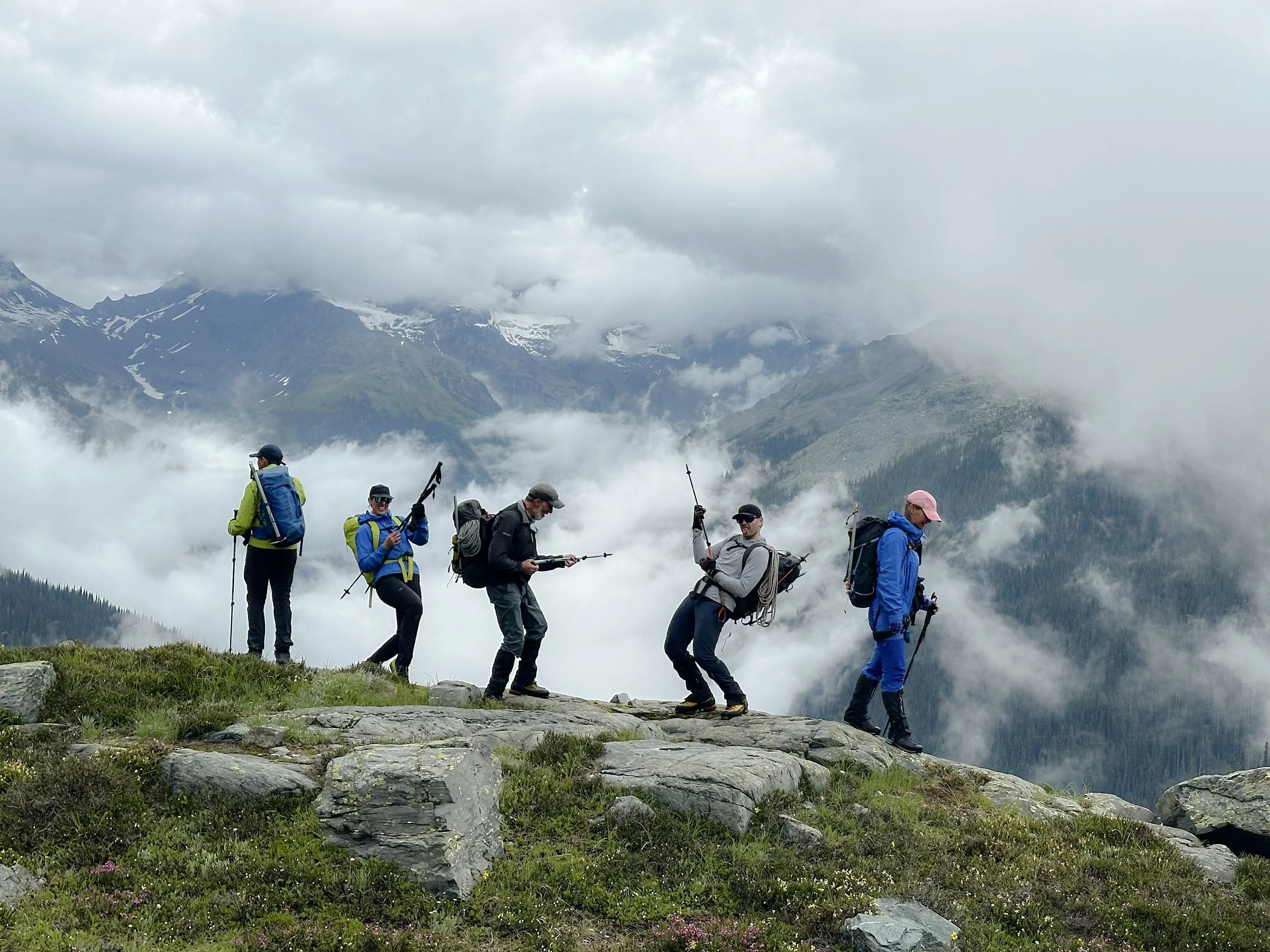
But the GMC isn't just a basecamp and a string of climbing days, even though that alone is pretty spectacular. It truly does feel like summer camp for adults: you show up, make a bunch of new mountain friends, reconnect with old ones, and spend a week playing in this incredible backyard together. That energy is a big part of why I, and so many others, keep coming back.
My first GMC: the nerves before the send
So here’s how the story went for me:
I had friends who'd done their first GMC the summer before mine and said it was the coolest thing they'd done all year. Coming from a year of van life and climbing across the US and Canada, that was high praise. But I still couldn't picture what a week at camp actually looked like. My brain was imagining everyone else showing up as total alpine crushers while I fumbled with my ice axe in the background.
When I mentioned my hesitations, my friends were quick to reassure me: camp was full of people from all kinds of backgrounds, a real range of experience levels and ages. What finally sold me were the skill-building sessions they kept describing: dedicated days where the whole point is learning and implementing, not just peak-bagging.
So I pushed aside my doubts and signed up. Man, I'm so glad I did.
Fast forward to August: the helicopter dropped us at Chess Group basecamp and I just stood there kindof in shock and awe. What a dream. I think I would have been happy just living there for a week even without climbing. Everyone was excited and kind, already getting to know each other over our first dinner. The guides walked us through the week's structure and I immediately felt like I had some bearings; still nervously giddy, but I was grounded and ready.
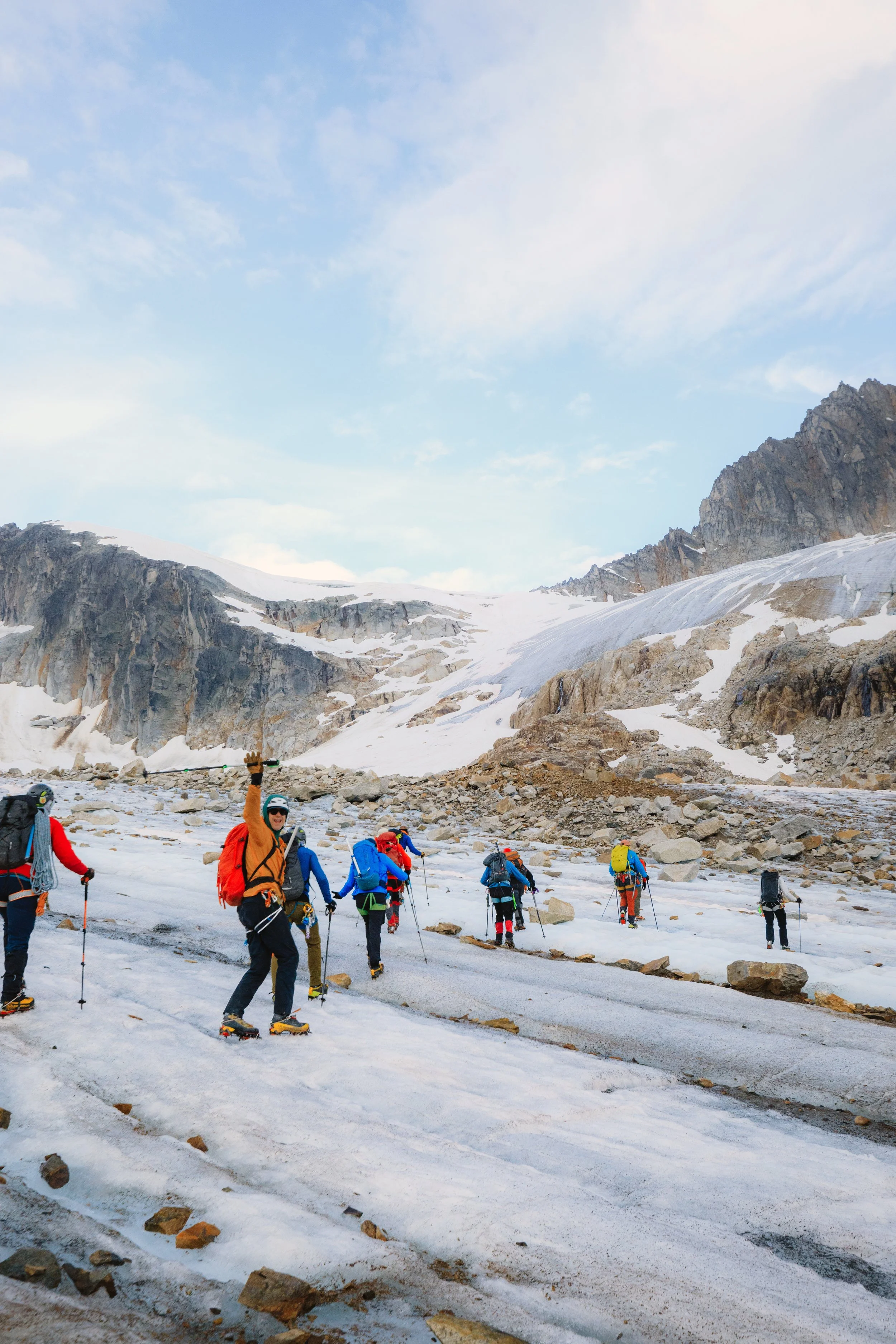
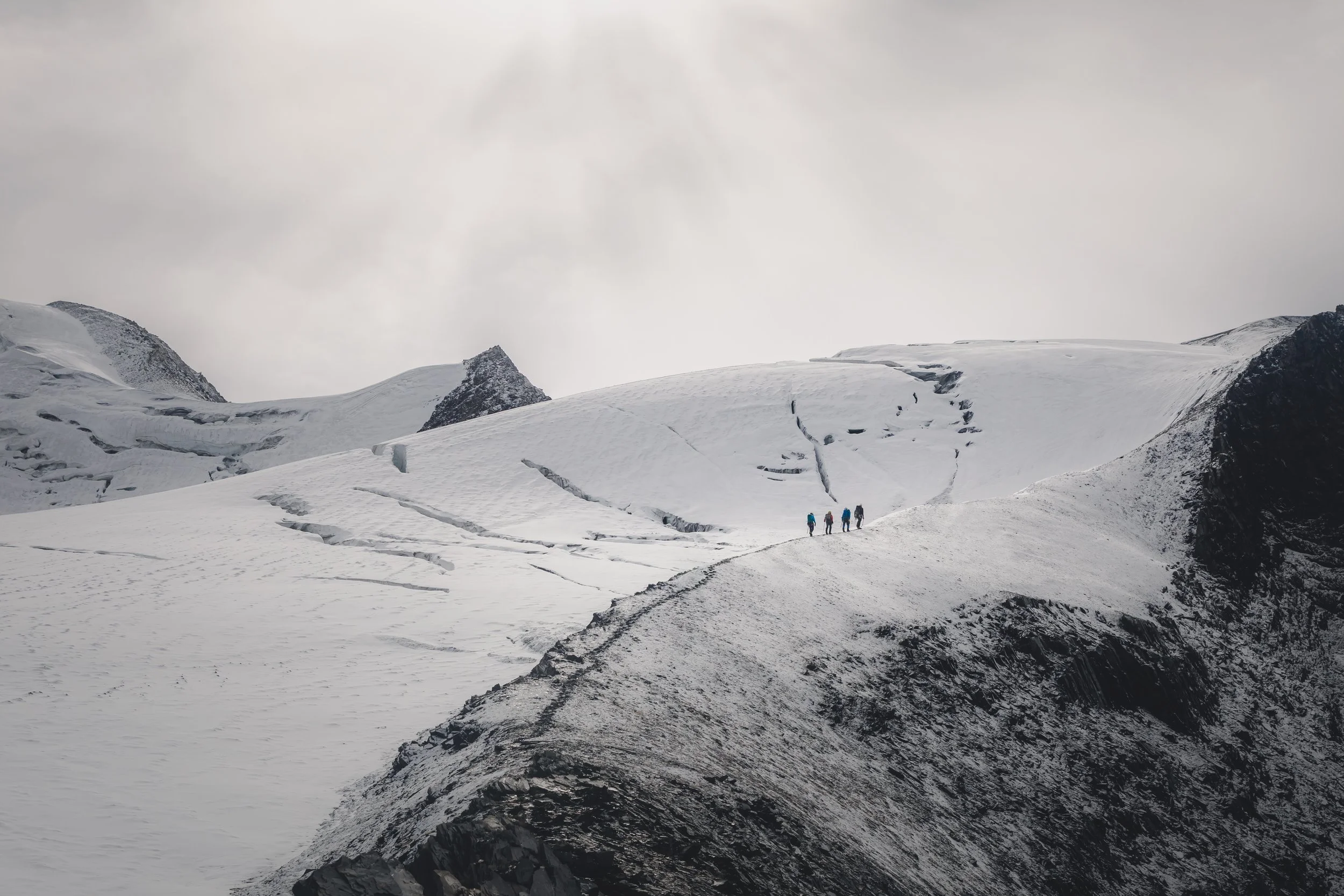
Our first full day made all the difference. The guide hosted “snow school”, which they split into beginner, intermediate and advanced groups. My nerves disappeared the moment I realized I wasn't the only one starting from basically from scratch. I figured I’d opt for the beginner group and revisit the fundamentals: from crampon fitting, roping up and moving as a team on glacier terrain, basic ice axe skills. We even got into some glacier science which made my inner nerd and curiosity very happy! And most importantly I could ask all my “sorry this is a dumb question” questions without anyone rolling an eye.
That first day set the tone for the whole week. Each day, you chose from different objectives, with skill sessions on days when the weather disagreed with our plans. If you want to push yourself on a bigger objective, go for it. If you need a rest day, nobody is going to side-eye you for it. There’s no pressure to do anything beyond your comfort zone, and all the stoke you need to climb.
By the end of that week, I couldn’t imagine not having signed up. The GMC was more than a week of mountaineering and cool climbs. It was a deep connection with the land and the people around me, and an escape from the noise of daily life. Something genuinely special. I’ve come back every summer since, tagging more peaks, building more skills, meeting more wonderful humans. Each year is its own chapter.
Who you'll meet at camp
If you're picturing a camp full of elite alpinists who have summited everything with a name, I can promise you it’s not that.
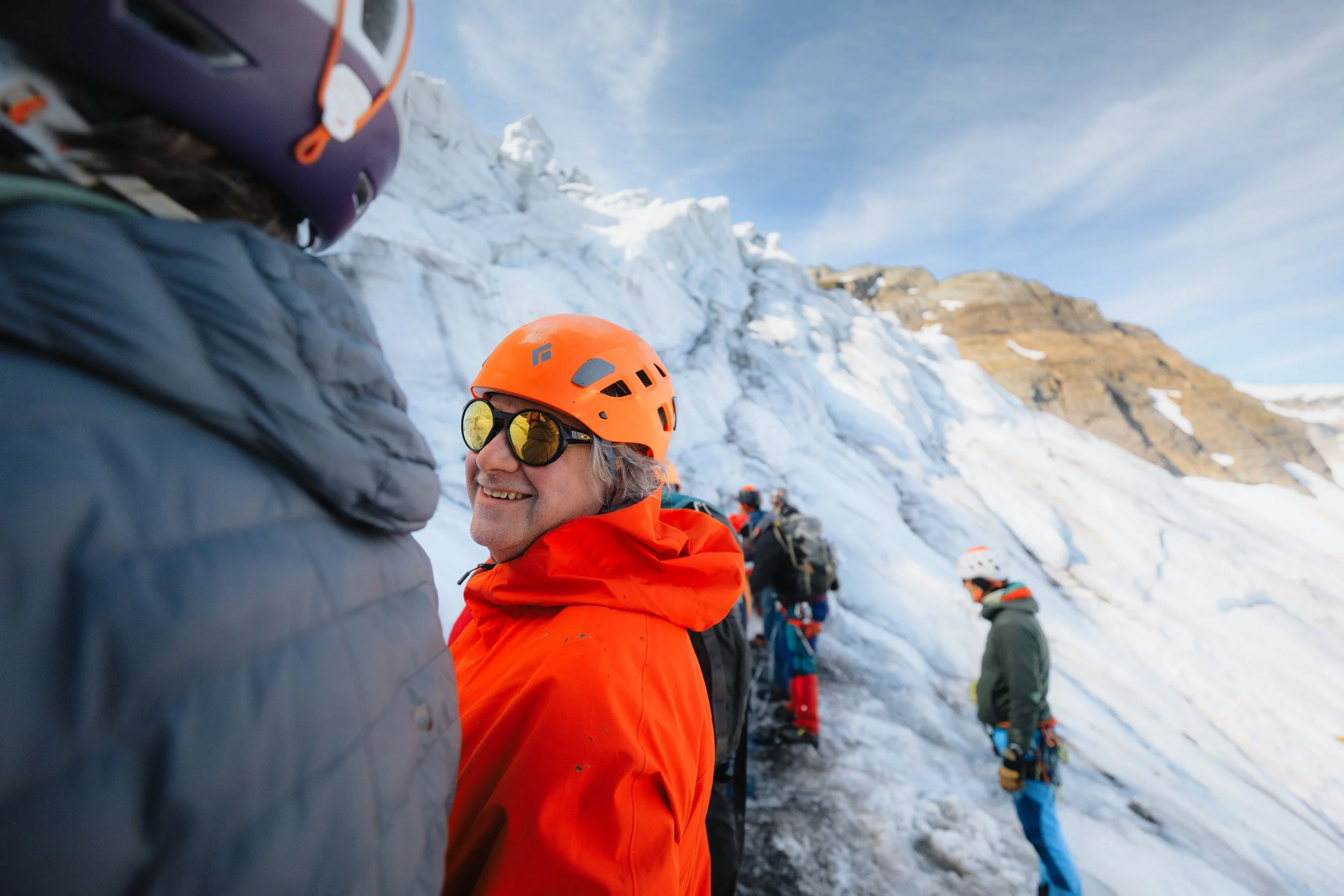
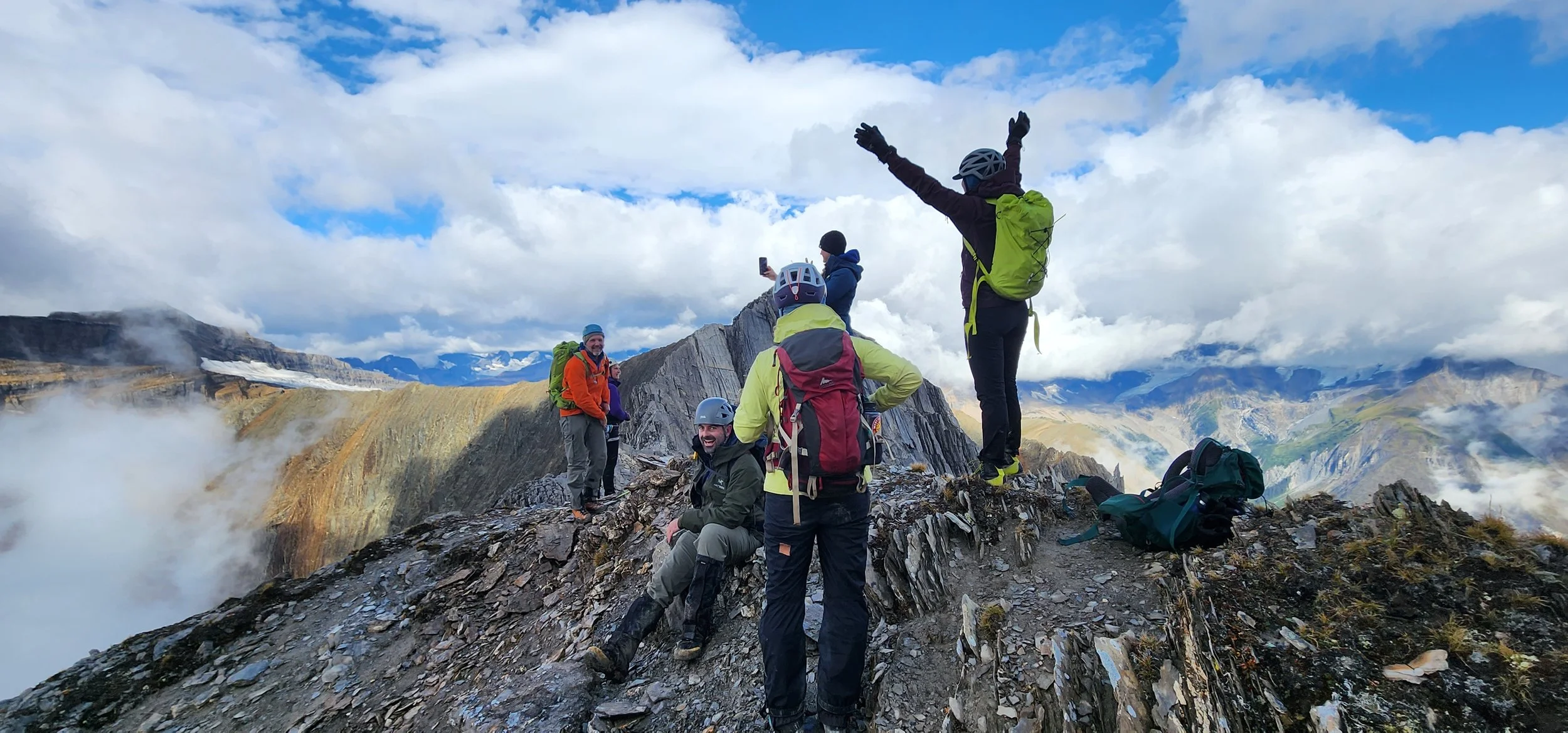
You’ll meet teenagers on their first mountaineering course, retirees who have been coming for decades, weekend warriors from the eastern provinces, and seasoned climbers who are there as much for the people as for the peaks. Some folks arrive having never roped up on a glacier. Others have years of alpine experience and are there for new terrain with old friends. The common thread is not skill level. It’s a shared stoke to be in the mountains with like-minded humans.
With around 30 participants per week, plus guides and volunteer leaders, you naturally find your people: the ones moving at your pace, learning the same things, nerding out over the same views. Because you’re eating together and watching sunsets from the same camp, those connections form quickly. Some of my closest climbing partners today are people I met at the GMC.
Am I fit and experienced enough?
Let’s put this all into context for the GMC:
Fitness. A typical day involves several hours on your feet with a pack across mixed terrain: trail, moraine, snow, ice, some scrambling. Depending on the objective you're looking at 600 to 1,000+ metres of elevation gain, but remember you're moving at a group pace with breaks for water, lunch and gear changes along the way.
I’d suggest a reasonable baseline: feeling comfortable on full-day hikes or scrambles, around 5 to 7 hours at a steady pace. If that's in your wheelhouse, you're in a good spot. No days out there are “maximum effort” (at least the guided weeks anyway lol). There are shorter objectives, skill days, and genuine rest days. No one will judge you for listening to your body.
Experience. You don't need to arrive as a polished alpinist. What helps is some comfort in the mountains: hiking, scrambling, maybe some climbing, so that steep or exposed terrain isn't completely brand new. Basic rope familiarity is a bonus but not a dealbreaker, since that's exactly what the skill sessions are for.
Remember, I showed up having worn crampons once, and I wasn’t alone! The guides met us exactly where we were at. And if you don't have all the gear, reach out to friends or ACC section members. I still borrow equipment myself.
Why the GMC is a dream for photographers and artists
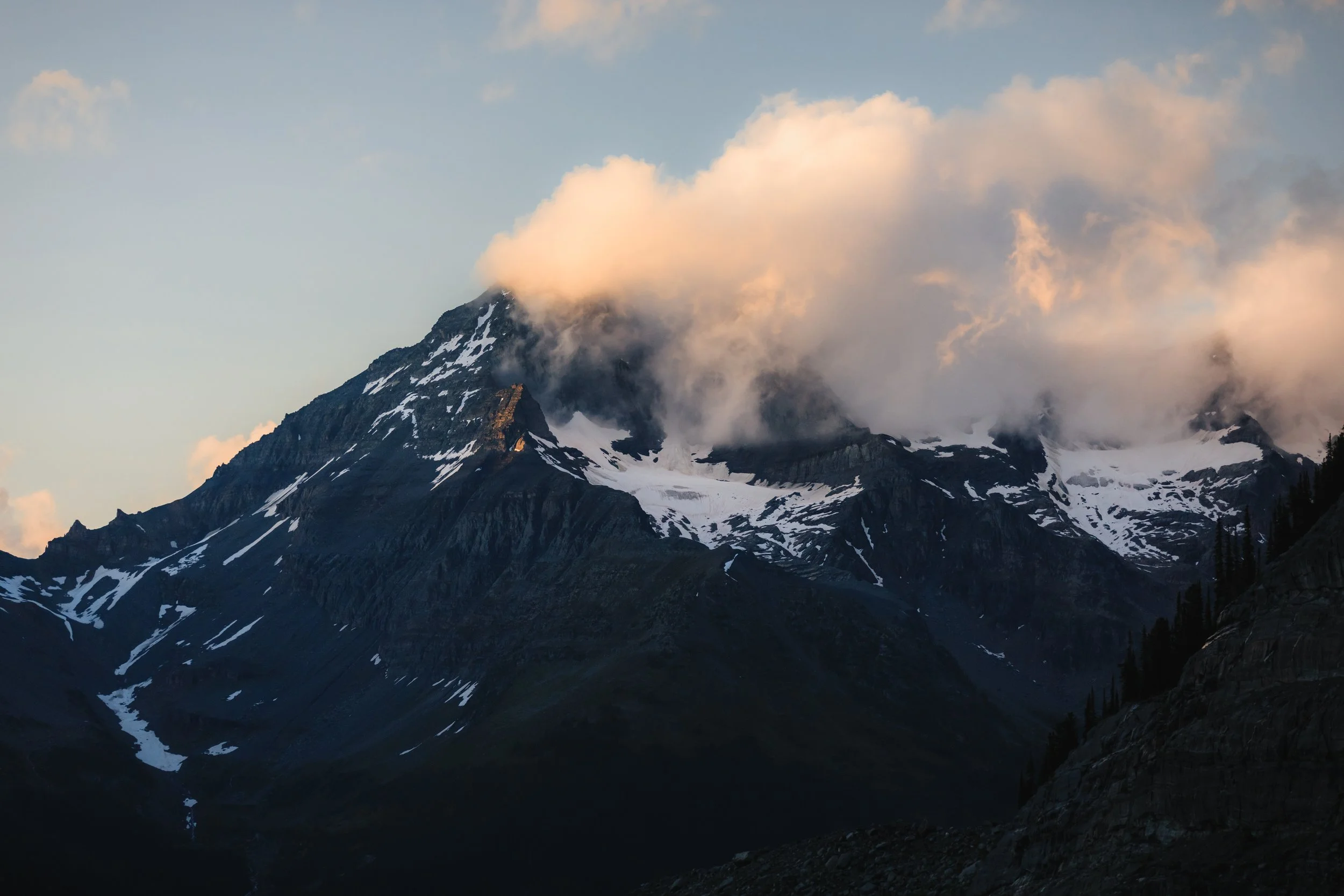
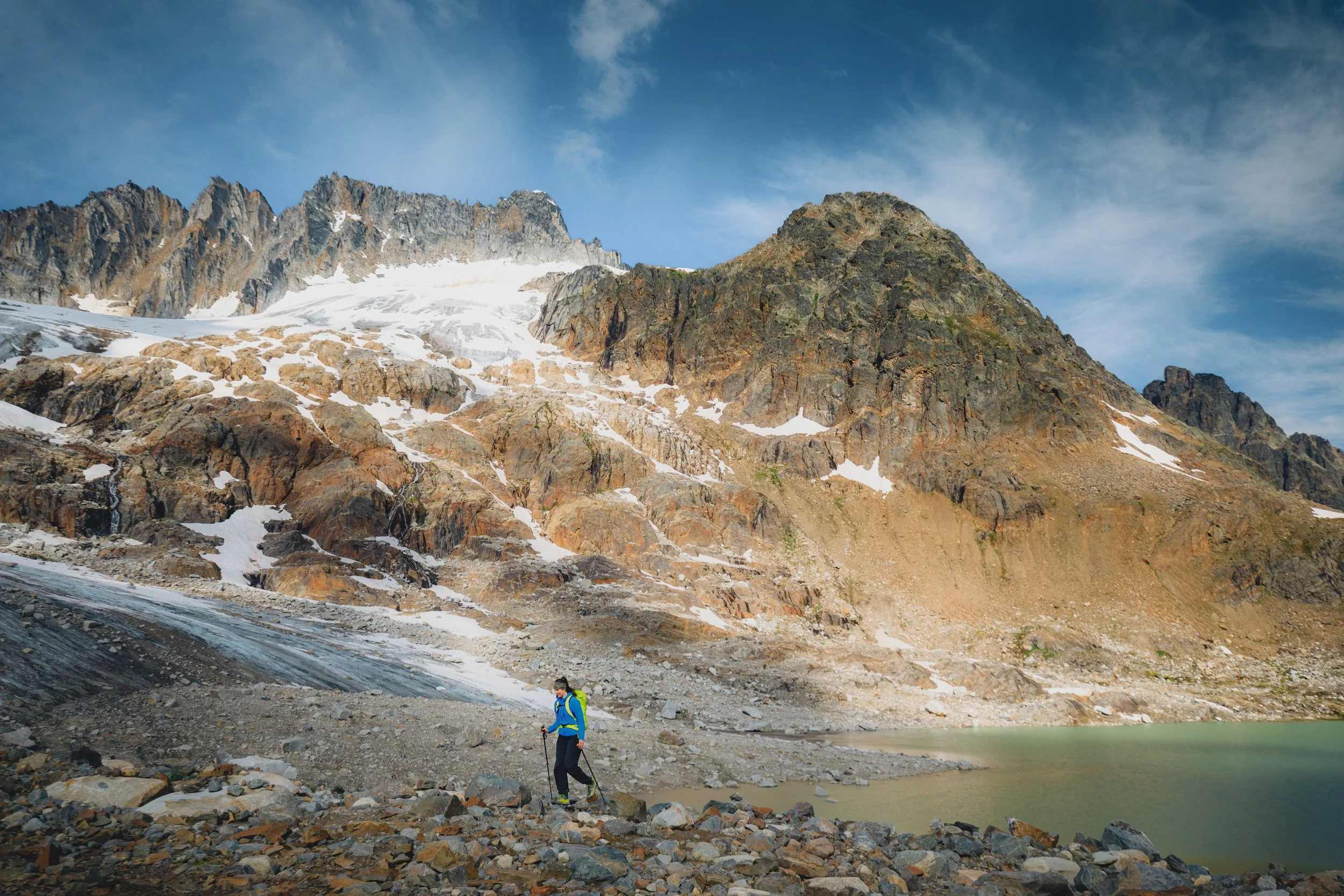
Some of the best photographs I've ever taken in my career have come from the GMC. And here's the thing: none of these are spots you'll ever see on Instagram. They're not accessible by trail. You get there because you're on an actual adventure, moving through terrain with a team, and the light just hits.
That's what makes GMC images feel different to me. They're not manufactured. There's no tripod set up at a known viewpoint at golden hour. They come from real moments, on real objectives, in places most people will never reach.
![ASCENSCION-[pyramid].jpg](https://images.squarespace-cdn.com/content/v1/621828756ea9365b6e4bdf2c/1774152196896-M9QDPBA94EXYY7HLW512/ASCENSCION-%5Bpyramid%5D.jpg)
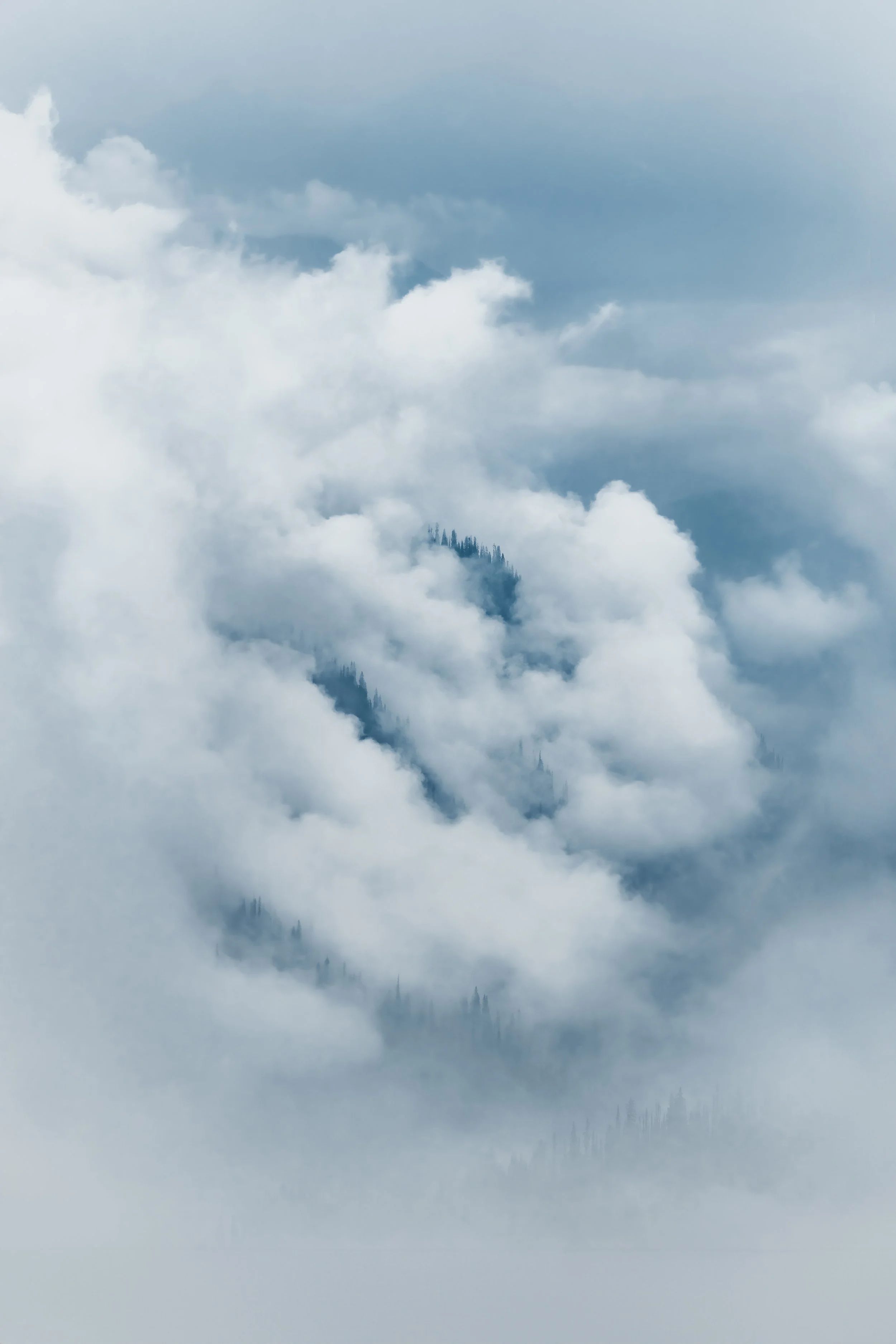
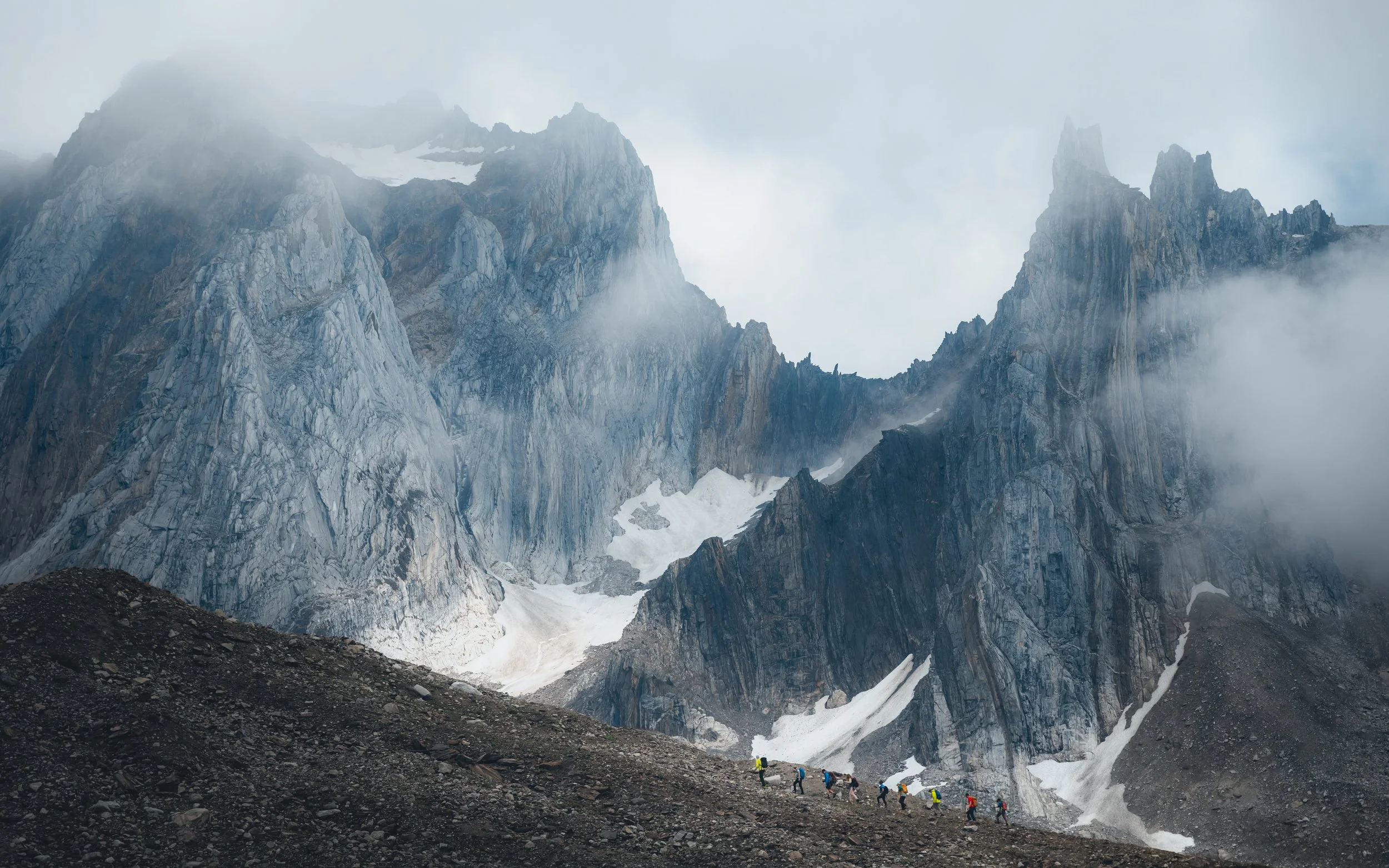
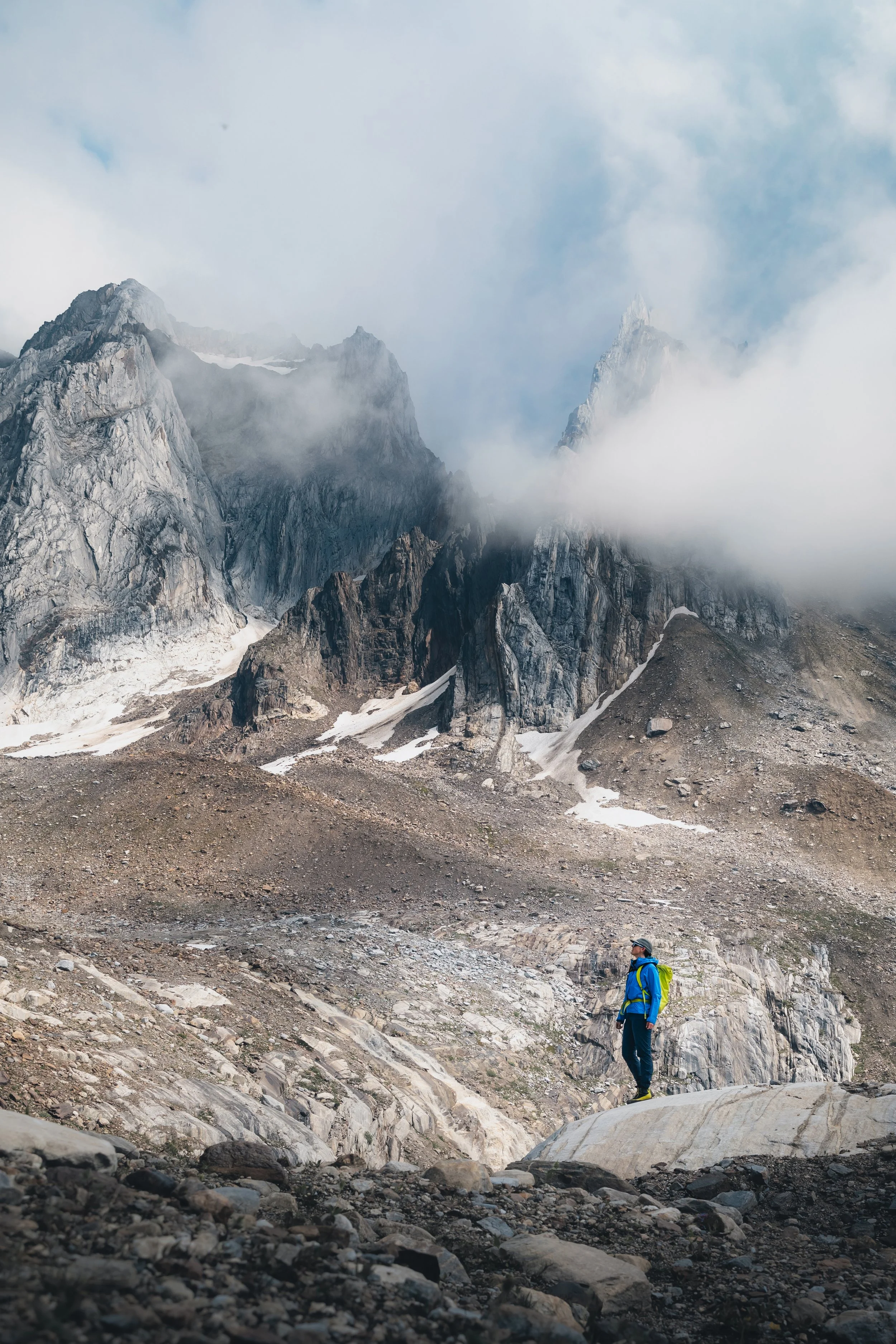
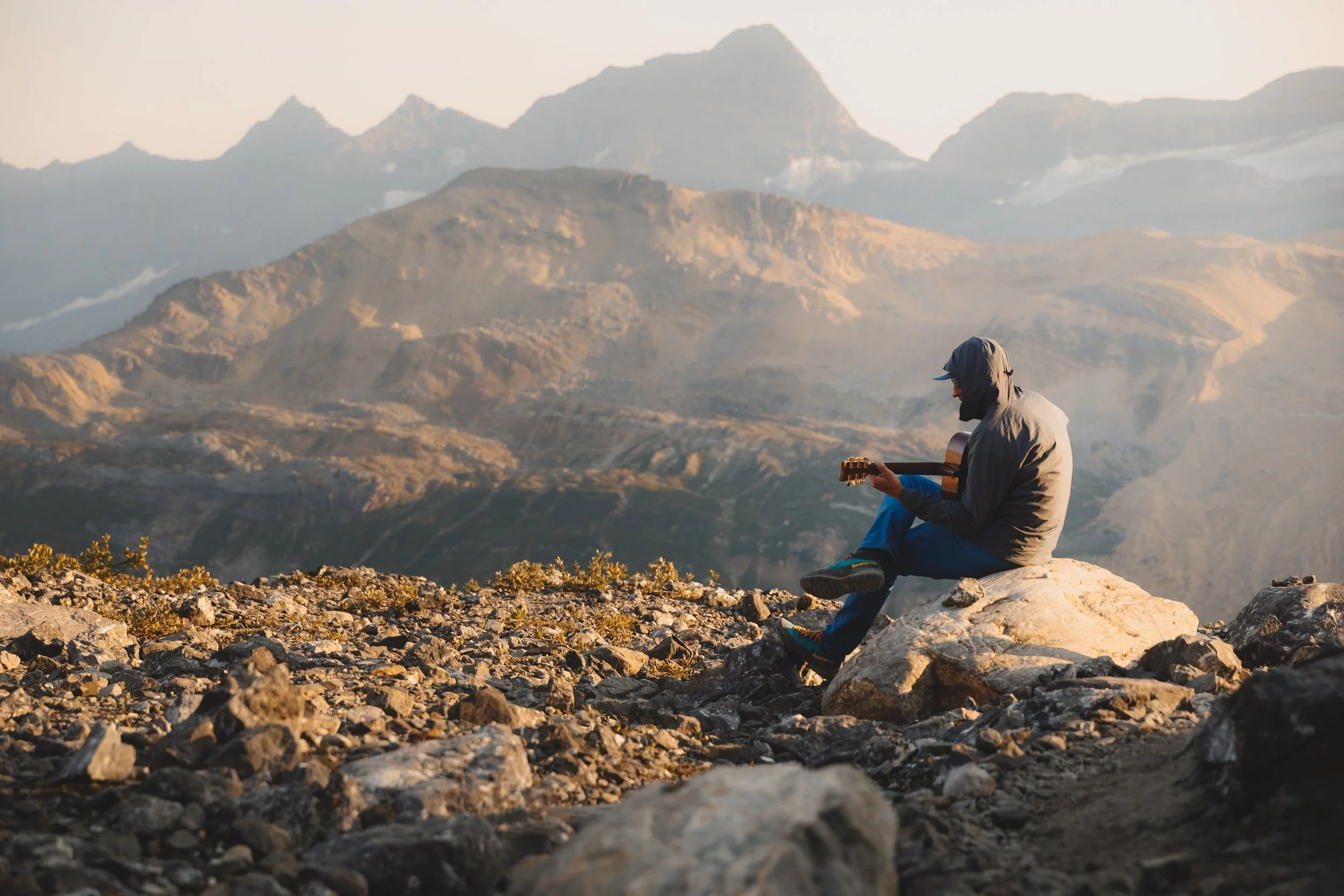
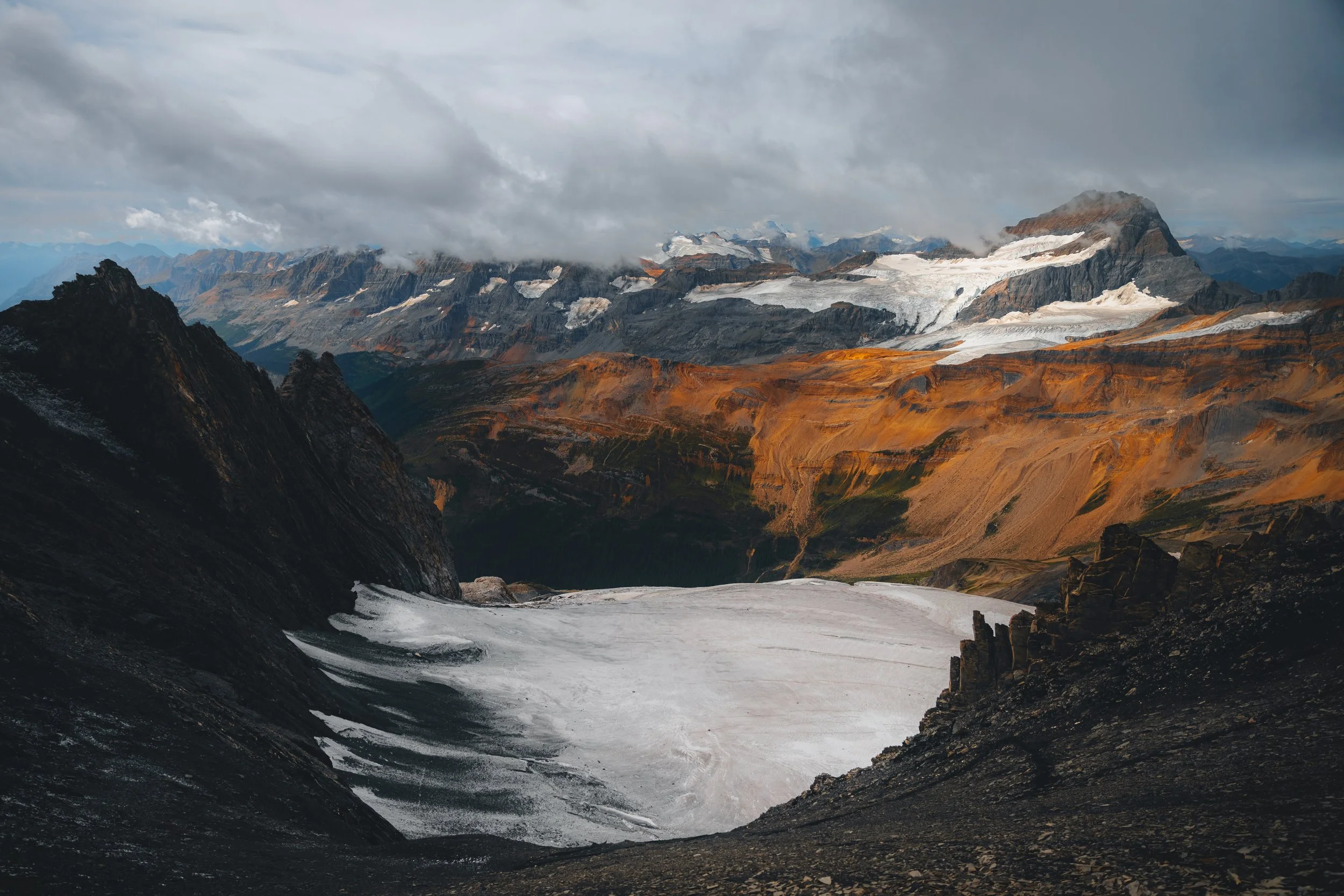
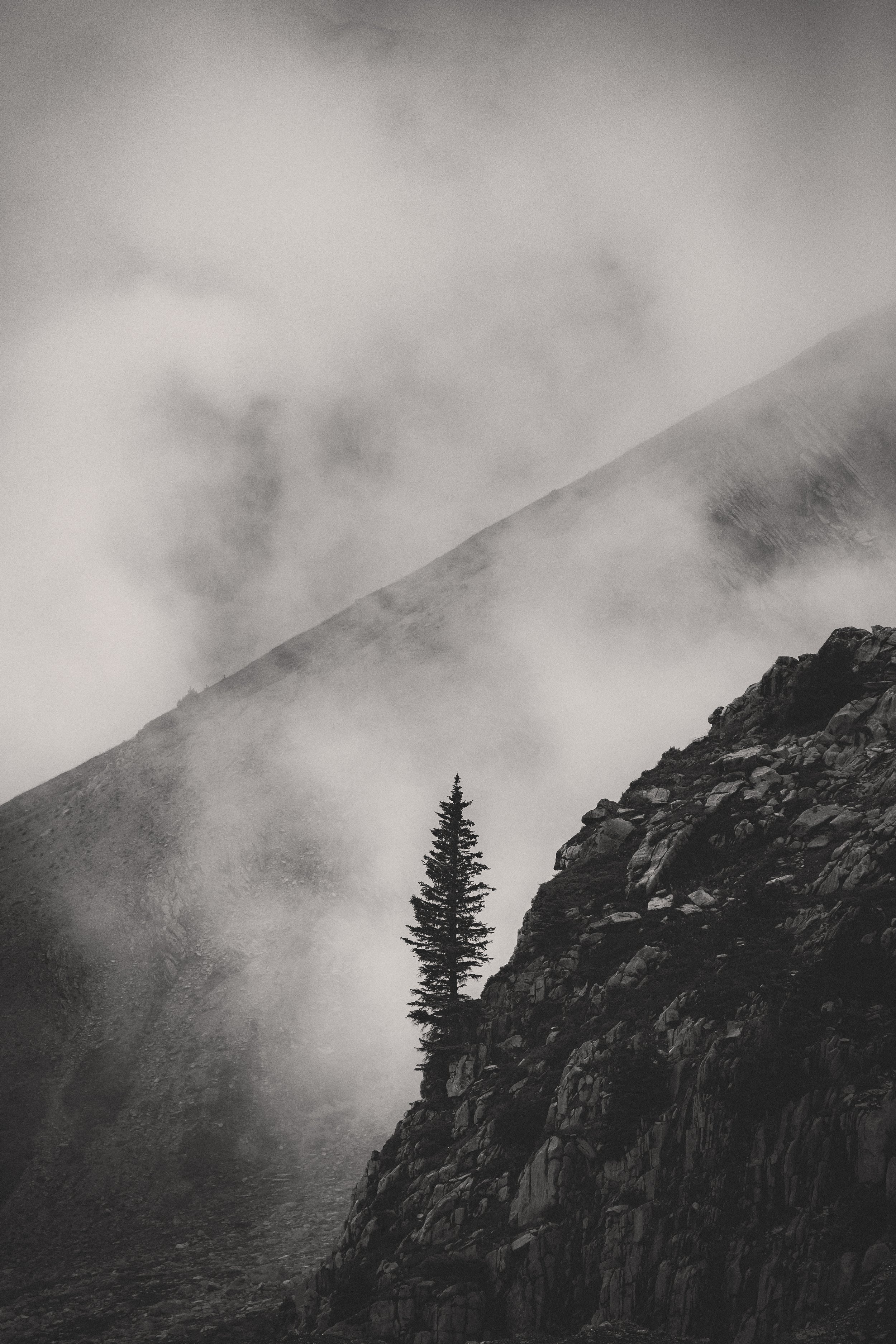
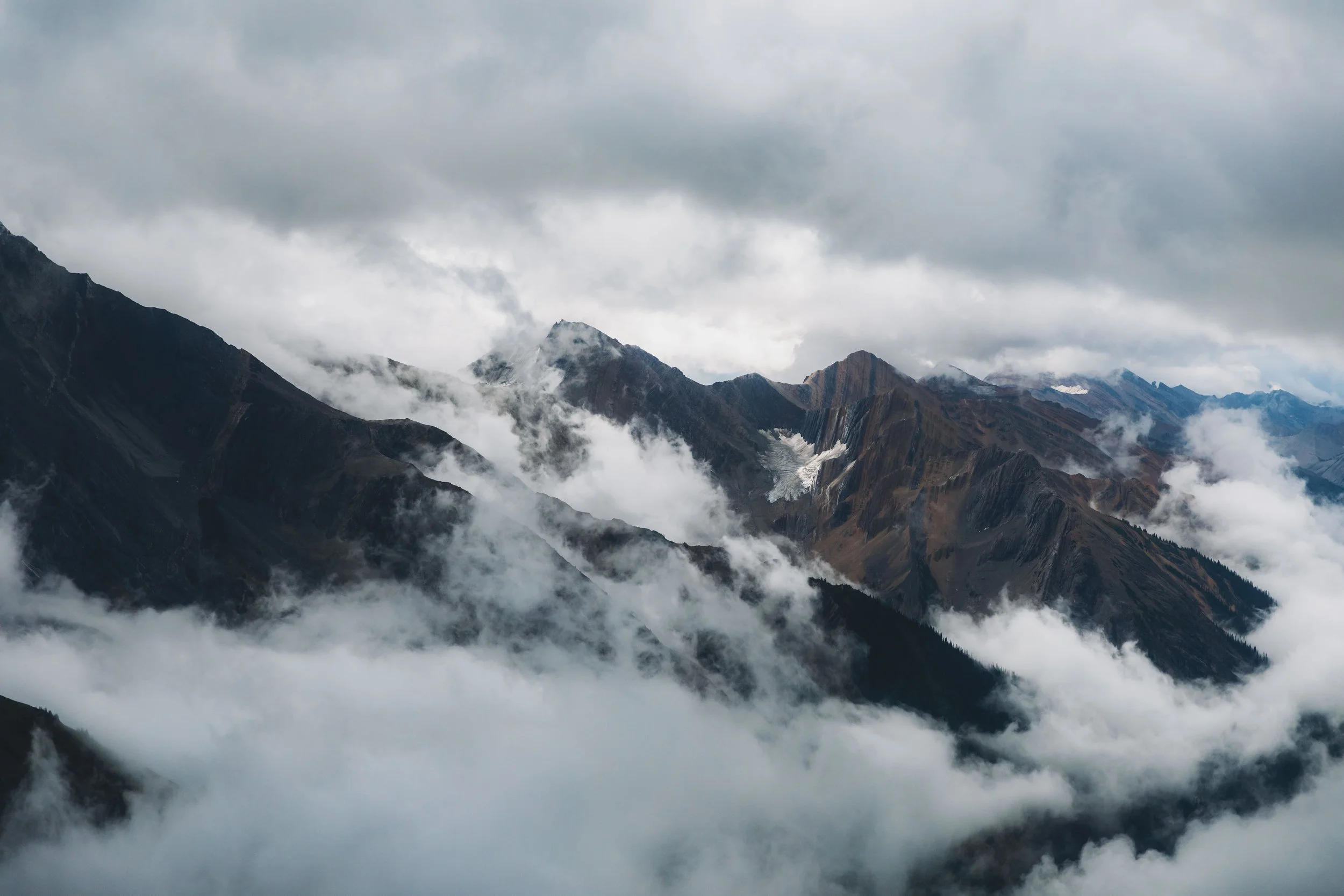
The final week of the program each summer is Artists Week: same basecamp, same helicopter access, same incredible food, but structured around creativity rather than peak-bagging. There's an artist-in-residence, guides who are themselves artists, photographers or scientists. Some people spend the days painting, some hike with their cameras looking for light, some still chase objectives with the guides. The groups are smaller, the outings shorter, leaving real time to actually make work rather than just move through terrain.
This summer I'll be there as an ACMG apprentice hiking guide for Artists Week. So if you're going, I'll see you out there.
What are the independent weeks?
The ACC launched “independent weeks” in 2024: the first two weeks of the program with the same basecamp setup, but without ACMG guides. You're responsible for your own planning, route-finding and objectives, so these are geared toward experienced mountaineers attending with trusted partners or team.
If you’re unsure here, I would say, ask yourself these questions: Do I have a team I’ve climbed with and trust in this terrain? Does mg party have all the technical gear? Does everyone have at least basic first aid training? Have I recently refreshed my rope skills?
My suggestion is until you can say yes to those, the traditional guided weeks are the right call, and let me emphasize there's nothing second-tier about that. My own arc is probably a useful reference: during my first GMC there's no way I would have felt ready. I didn't have a solid team, gear or the glacier experience. After several years of returning and training outside of camp, including getting my Wilderness First Responder, I finally feel ready to join. The independent weeks are worth working toward. The guided weeks are where most people belong to start.
“So, is the GMC for me?”
If you've made it this far, I think you already know the answer.
The GMC isn't an exclusive club for elite mountaineers. It's a 100-year-plus tradition built around getting people into wild, remote mountains and helping them grow as climbers, artists and humans. So if you've been asking, “am I strong enough? Am I experienced enough?”
The answer is an enthusiastic yes. The fact that you're even asking means you're taking it seriously in all the right ways.
If you still have questions about fitness, gear, which week to choose, or anything else, ask away in the comments or send me a message. The ACC team is also incredibly helpful.
Can't wait to see you at camp.
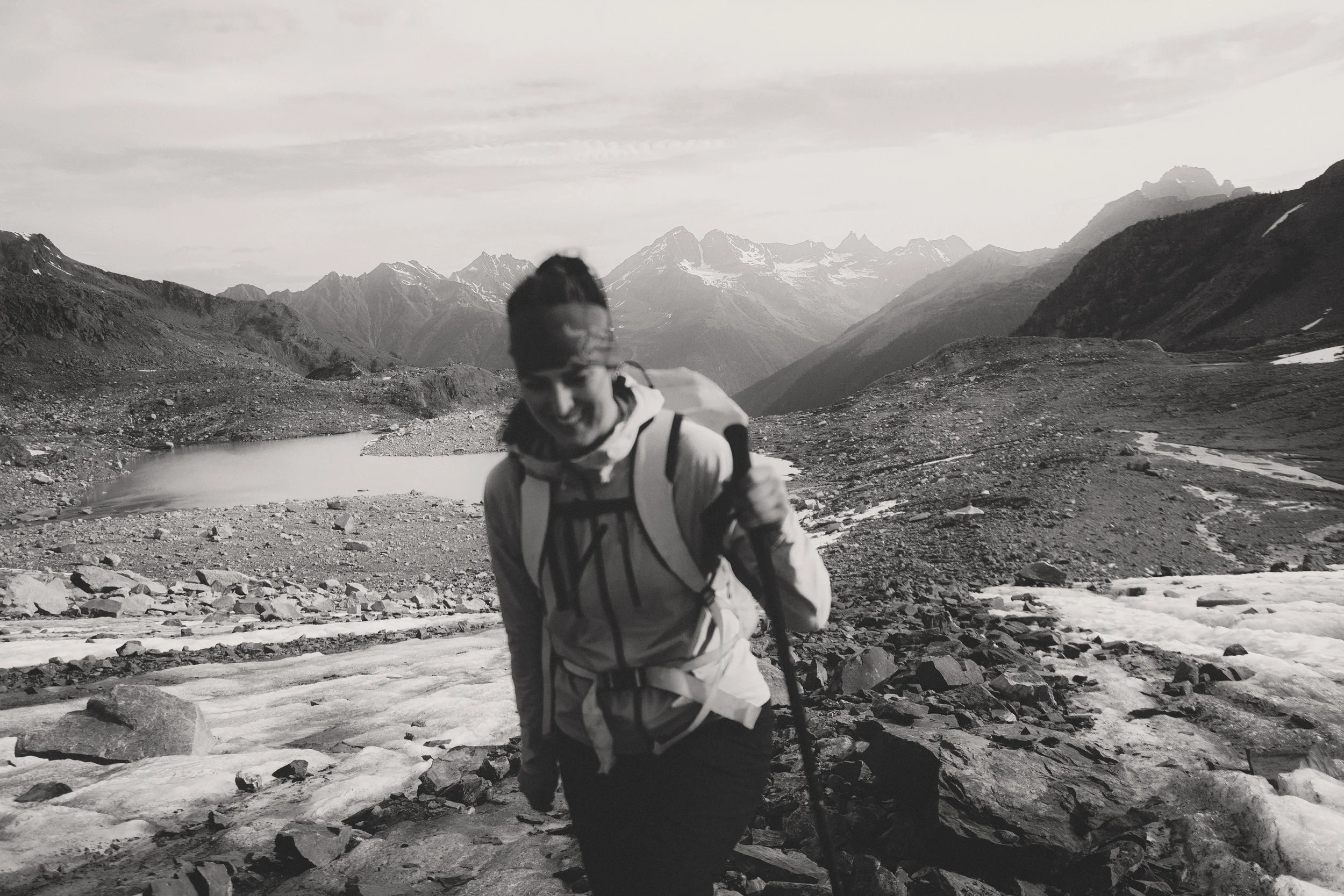
Alex Mack is a landscape and mountain photographer, ACMG apprentice hiking guide, and cardiovascular physiologist based in Vancouver, BC. She writes about mountains, photography, and the space where science meets adventure.
With appreciation that the lands known today as Canada are home to the enduring presence of all First Nations, Métis, and Inuit peoples. We acknowledge the past, present, and future generations of these Nations who continue to lead us in stewarding this land, and honour their knowledge and cultural ties to this place.